


//
Organization
Evidence-Based Task Routing
01
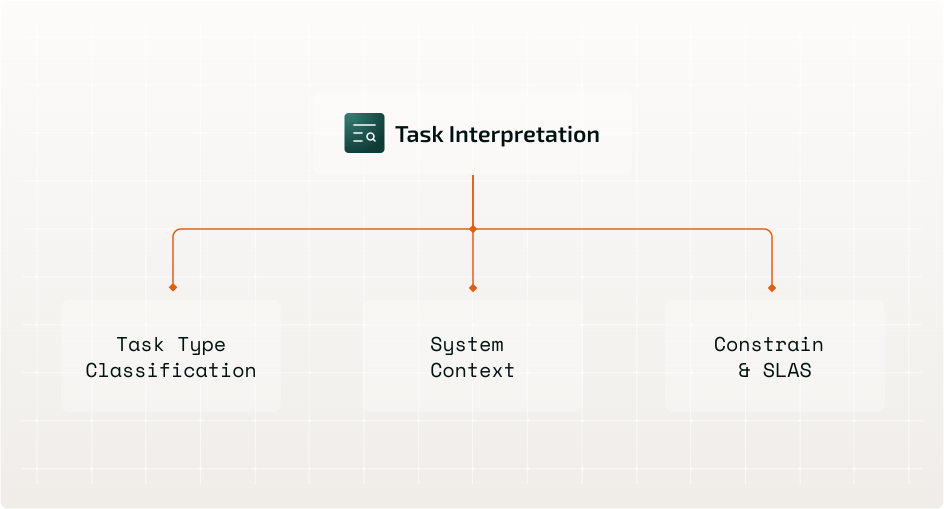
Task Interpretation
Read every request in full-system context before deciding.
Task-Type Classification
Detect what each request actually is - SQL, summarization, code, and more.
System Context
Factor in live conditions: payload size, load, hardware headroom.
Constraints & SLAs
Honor the latency budget, quality bar, and data-residency rules per task.
02
Routing Engine
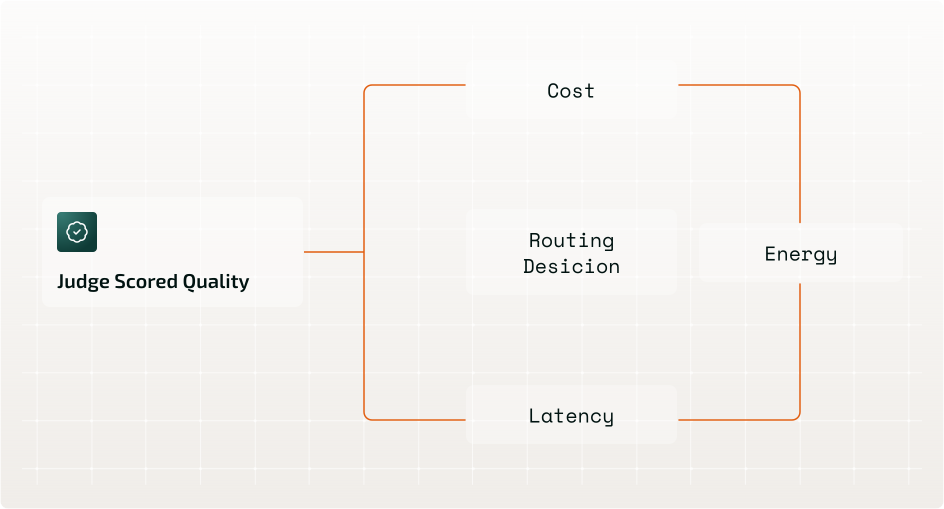
Map each task to its best-fit model against the objectives that matter to you.
Cost-Quality Tradeoff
Weigh compute cost against measured quality for every candidate model.
Multi-Objective Weighting
Balance cost, quality, latency, and energy under a policy you set.
Judge-Scored Quality
Use judge models to score outputs on your workloads, not vendor benchmarks.
03
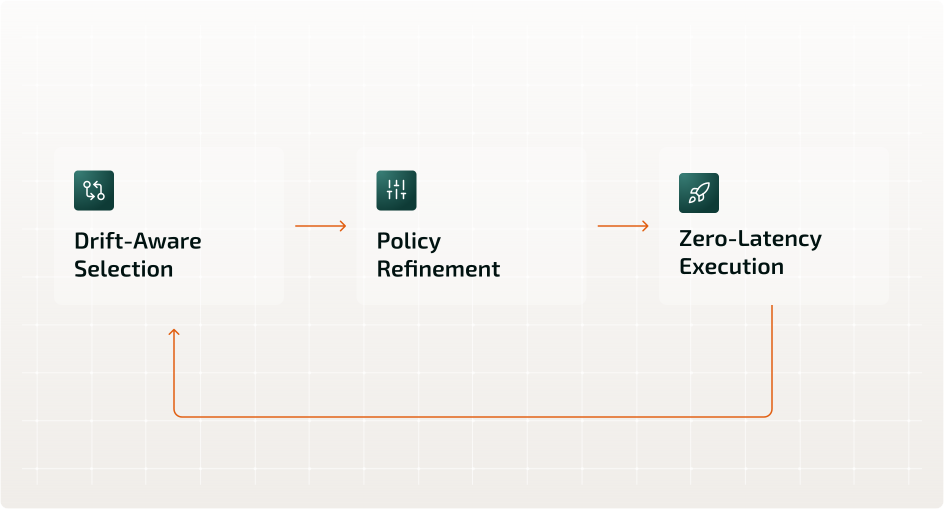
Continuous Improvement
Decisions sharpen as your system changes.
Drift-Aware Selection
Routing shifts as live model and workload characteristics move.
Policy Refinement
Recommendations improve as new production evidence arrives.
Zero-Latency Execution
Routing runs as local policy, outside the request path - no proxy, no hop.
Get started
We are here to answer your questions.
Our technical sales team are here to answer your questions. If you would like to see our product in action - we'll stand up a demo environment that mirrors your production settings - so you see exactly how it behaves on your stack.